
Smart Fitting Rooms
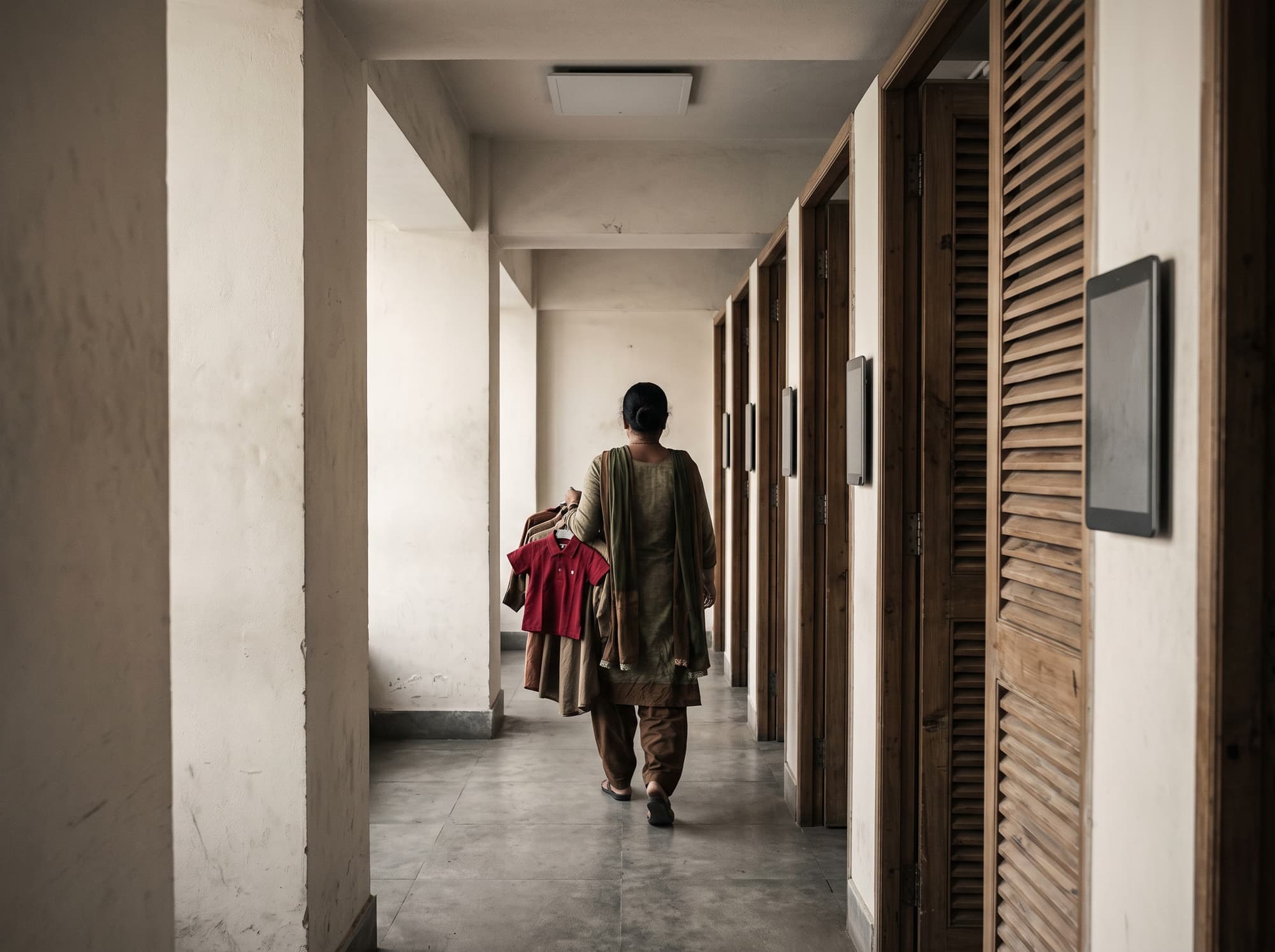
Overhead readers and a wall display that turn the try-on into a conversation instead of a dead end.
The problem it solves
The fitting room is where the highest-intent customers in your store go, and it is the one place with no staff, no information and no way to ask for a different size without getting dressed again.
A customer carrying four garments into a cubicle has already decided they like all four. What happens next decides your conversion rate, and right now what happens is: they try them, three do not fit, and they leave with none — because asking for a size 40 means putting their own clothes back on and finding someone.
Overhead readers identify what came into the room. A wall display shows the items, the sizes and colours actually in stock, and a button that pages an associate. That is the whole intervention. It is deliberately not a smart mirror — those cost several times more, break more often, and buy you very little that a tablet and a tuned antenna do not.
The workflow
Four steps, in this order. A step out of sequence is a broken process, not a variation.
- 01
Detect
An overhead array reads the garments as they enter the cubicle, tuned tightly enough that the next room's items do not appear on this room's screen.
- 02
Present
The wall display lists what is in the room with live availability — other sizes, other colours, and what pairs with it.
- 03
Assist
One tap pages an associate with the room number and the item already on their handset. No shouting over the rail.
- 04
Measure
Every session records what went in and what was bought, so the try-to-buy funnel becomes a number you can act on per style.
What it is
made of
Four layers, in the order data moves: a tag is read, the read becomes an event, a rule decides what it means, and a business system acts on it.
- 01
Tags
What carries the identity
- Item-level UHF RAIN on all apparel
- Care-label inlays for sewn-in applications
- 02
Readers & edge
What turns presence into an event
- Overhead UHF array per cubicle, tuned to the room
- Handheld for exceptions and stock checks
- 03
Platform
What decides what the event means
- Item lookup and live availability
- Session tracking and try-to-buy analytics
- Associate paging and queue
- Optional recommendation service
- 04
Integrations
What acts on the decision
- POS
- Inventory
- Associate mobile app
What we supply
- 01
Overhead UHF array
A flat ceiling panel per cubicle. The engineering that matters is read-zone containment — an array that sees into the next room produces nonsense on both screens.
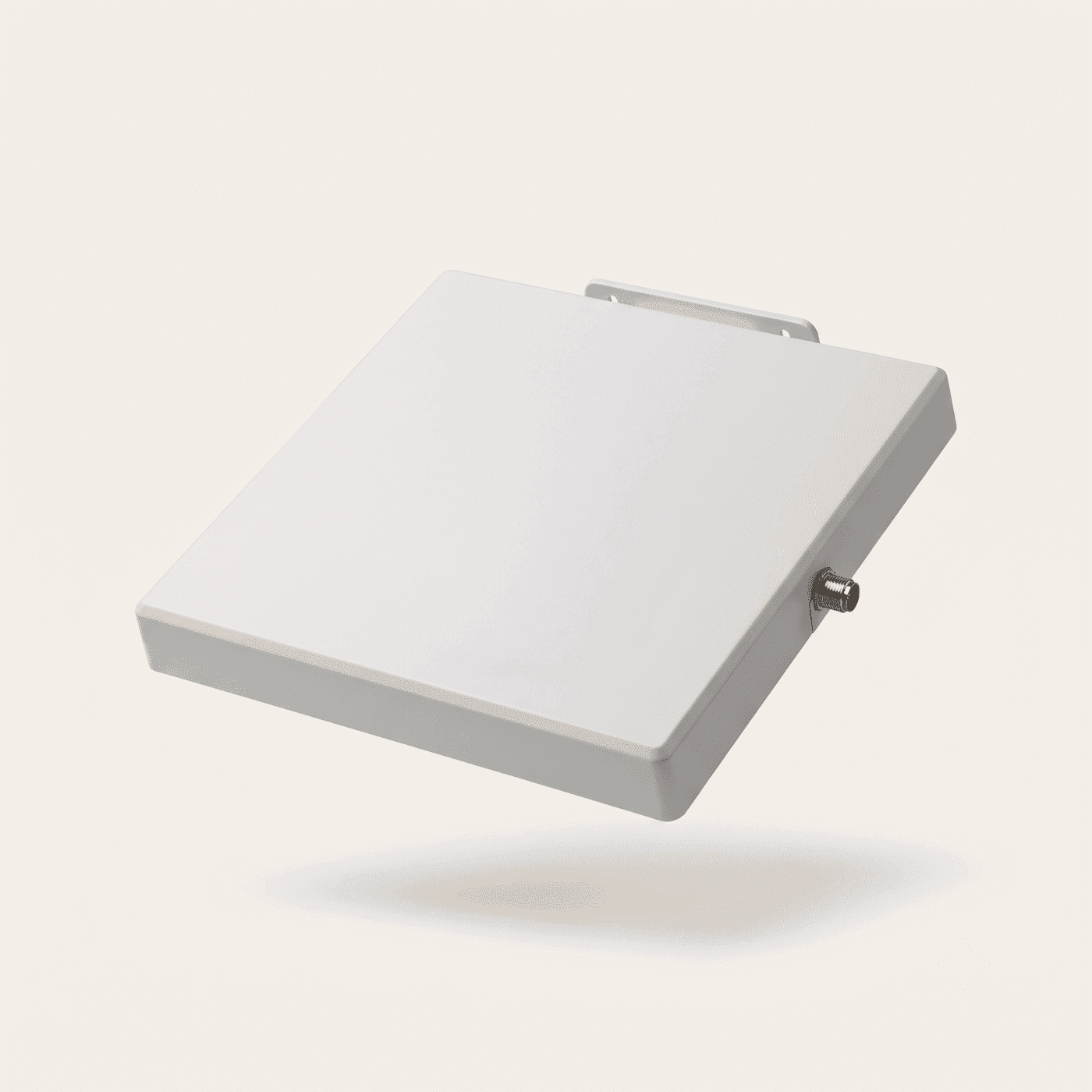
- Ceiling-mounted, one per cubicle
- Read zone tuned to cubicle footprint
- Cross-read suppression at commissioning
- PoE, single cable run
- 02
Wall display
A standard commercial tablet or panel, wall-mounted at eye height. Deliberately ordinary hardware — this is the part that gets knocked, and replacement should cost very little.
- 10–15 inch touch panel
- Wall or mirror-edge mount
- Bangla and English interface
- Off-the-shelf, easily replaced
- 03
Associate app
The paging endpoint. A request arrives with room number, item and size already attached, so the associate walks to the rail first and the cubicle second.
- Android or iOS handset
- Room-level request queue
- Response-time tracking
- Works on existing store devices
What to expect
Ranges, not single flattering figures. Baselines are captured for four to eight weeks before a pilot starts, so the delta is measured rather than claimed.
- Try-to-buy conversion
- +10–20%
- Assist response time
- Measured per room
- Session capture
- Every entry logged
- Per-style funnel
- Tried vs bought
What to plan for
Every module has a failure mode. These are the ones that actually bite on this one, and what we do about them — because finding out later costs more than knowing now.
- Displays are capital cost, and RF tuning in dense apparel is genuinely fiddly.
- Pilot a limited number of rooms in one flagship. Tune the arrays there, prove the conversion delta, then roll out with a known-good design.
Your existing systems
- POS
- Inventory
- Associate app
Where it earns its keep
- Flagship apparel stores where conversion, not footfall, is the constraint
- Fashion retailers already running item-level RFID for stock
- Brands who want a visible experience differentiator without smart-mirror pricing
Before you
buy
The things operations directors actually ask on the first call.
Why not smart mirrors?
Cost and failure rate. Overhead antennas plus a wall tablet deliver the same three things customers actually use — what's in here, what else is available, come and help me — at a fraction of the price and with parts you can replace locally.
Will one room's screen show another room's clothes?
Not once tuned. Cross-reads are the single most common failure in fitting-room deployments and the reason we pilot before rolling out. Read-zone containment is verified per cubicle at commissioning.
Does this need every garment tagged?
Every garment you want to appear on the screen, yes. In practice most stores doing this already tag at item level for stock accuracy, so the fitting room is a second use of a tag that is already paid for.
The rest of retail
- 01
Return Fraud Prevention
Serialised tags linked to the sale, so a return can be checked against the receipt that created it.
- 03
Real-Time Inventory & Automated Replenishment
Item-level reads that keep store and DC stock accurate, and reorder rules that fire on their own.
- 04
EAS & High-Value Item Protection
Gates, tags and detachers you already know — with the incident data they have never given you.
- 05
Fast Checkout & Product Locator
Read a whole basket at once instead of item by item, and find the one unit that is somewhere in the store.
- 06
Supplier Performance & Automated Receiving
Validate a delivery as it comes through the door, and score the supplier on what actually arrived.
- 07
Demand Forecasting & Product Performance Analytics
Movement and sales signals turned into reorder timing, out-of-stock warnings and honest style performance.
- 08
Textile Tracking & Jewellery Security
Apparel tracked from backroom to rail, and high-value pieces counted continuously in the case.
Let's design theright system foryour floor
- Call+880 1713 819528 · 01713 222558
- Emailservice@ratsbd.com
- VisitGround Floor, House-7, Road-13, Sector 14, Uttara, Dhaka-1230
Get your quote
Tell us your store type and city. A specialist surveys your floor, recommends the exact system and sends a clear quote — no obligation.
Request a quote Chat on WhatsApp