
Production Planning Optimisation
Live WIP status at every station, so the planner sees the bottleneck while it still matters.
The problem it solves
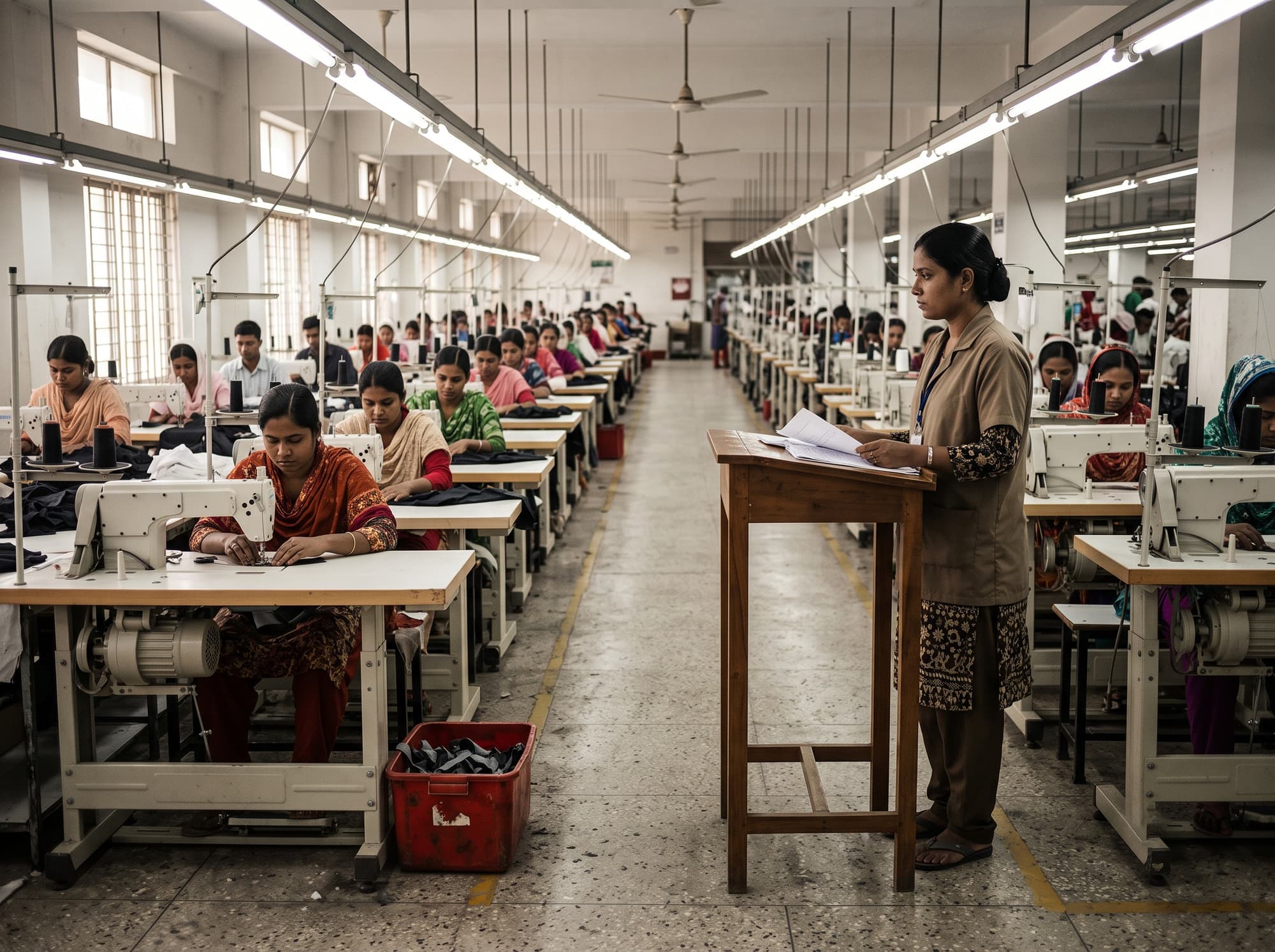
Every planner knows where last week's bottleneck was. Almost none can tell you where this morning's is, which is the only one they could still do something about.
Planning runs on a model of the floor that was accurate when the shift started. By mid-morning a machine is down, an operator is absent and a style is running slower than standard — and none of that reaches the plan until the day is over and the variance report is written.
Station reads make stage transitions self-reporting. As bundles move through the line, the platform maintains a live picture of what is where and how long it has been sitting. The planner gets a capacity view that is hours old rather than days, plus re-sequencing suggestions when the model detects work piling up ahead of a constrained station.
The workflow
Four steps, in this order. A step out of sequence is a broken process, not a variation.
- 01
Tag the carrier
Bundles, bins and traveller cards get UHF tags at cutting, linked to the order and its route.
- 02
Capture transitions
Station portals and overhead arrays log each stage change automatically — no operator scanning step to skip.
- 03
See capacity live
The planner gets current WIP by station, dwell times, and where work is accumulating ahead of a constraint.
- 04
Re-sequence
The optimiser proposes changes; adherence to the plan is then tracked against what actually happened.
What it is
made of
Four layers, in the order data moves: a tag is read, the read becomes an event, a rule decides what it means, and a business system acts on it.
- 01
Tags
What carries the identity
- UHF tags on WIP carriers and bins
- Traveller card tags per order
- Rugged tags for reusable carriers
- 02
Readers & edge
What turns presence into an event
- Station portals and overhead arrays
- Handhelds for rework and exceptions
- Edge gateways with local buffering
- 03
Platform
What decides what the event means
- WIP model and route definitions
- Dwell time and bottleneck detection
- Schedule optimiser and re-sequencing
- Adherence tracking and dashboards
- 04
Integrations
What acts on the decision
- ERP
- MES
- Planning systems
What we supply
- 01
Station reader
Mounted at the station so the transition is captured by the work moving, not by someone remembering to scan. That distinction is the whole reliability of the data.
- Fixed antenna at station boundary
- Read zone tuned to the station footprint
- No operator action required
- PoE, single cable per station
- 02
Edge gateway
Buffers reads locally when the factory network drops, which on most shop floors is a when rather than an if. Also runs local rules so critical logic survives the outage.
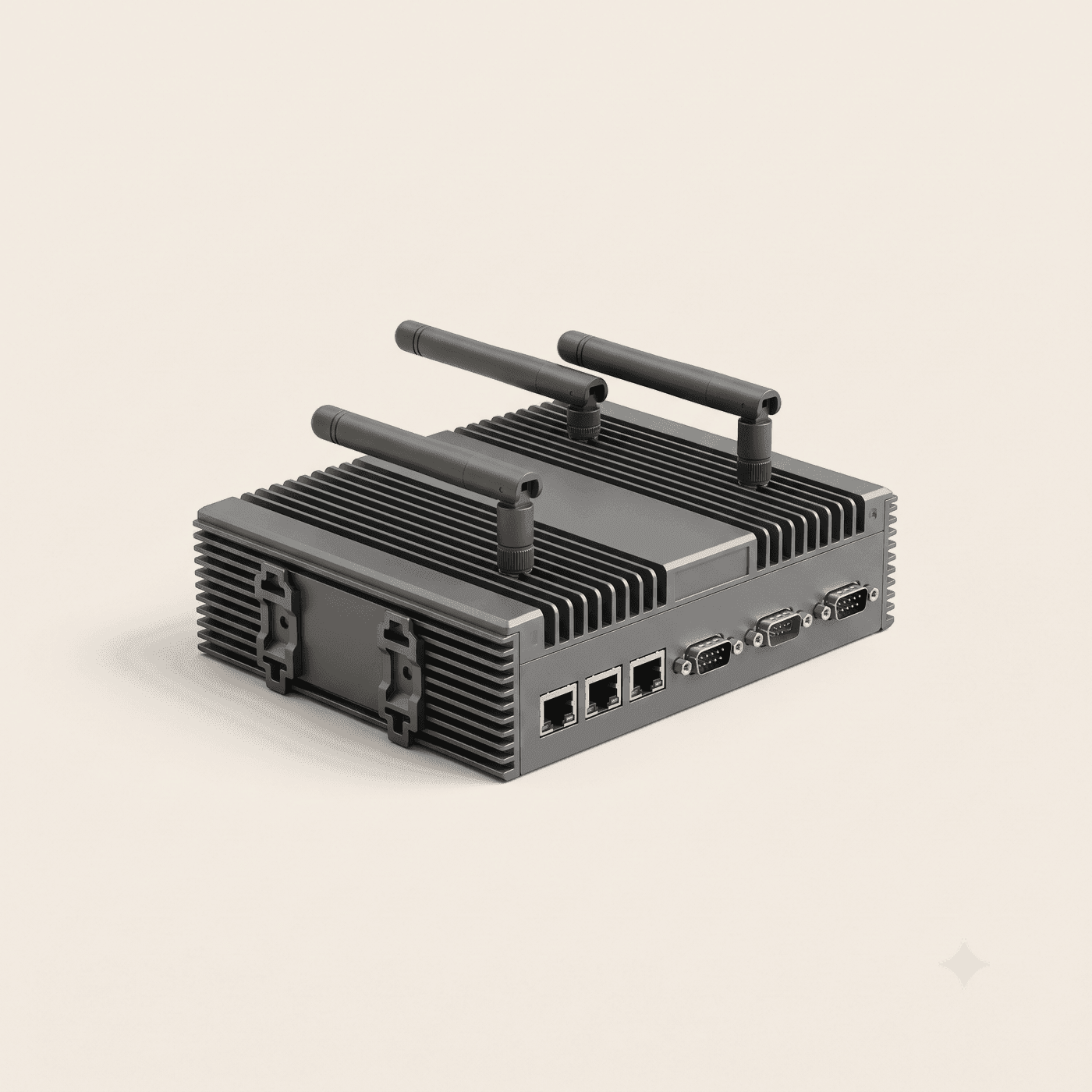
- Local rule execution
- Store-and-forward buffering
- 4G/5G backup link
- DIN-rail mount for panel installation
What to expect
Ranges, not single flattering figures. Baselines are captured for four to eight weeks before a pilot starts, so the delta is measured rather than claimed.
- WIP dwell time
- 15–25% lower
- Schedule adherence
- +10–20 pts
- Bottleneck visibility
- Hours, not days
- Throughput
- 10–20% better
What to plan for
Every module has a failure mode. These are the ones that actually bite on this one, and what we do about them — because finding out later costs more than knowing now.
- This depends on reliable read coverage and disciplined traveller processes. Gaps in either produce a confidently wrong picture, which is worse than no picture.
- Start on one bottleneck line where coverage can be proven end to end, with read-rate monitoring that flags a station going blind rather than silently dropping transitions.
Your existing systems
- ERP
- MES
Where it earns its keep
- Plants with 3+ lines and recurring schedule slippage
- Operations where the bottleneck moves week to week
- Factories already running ERP and wanting live floor data in it
Before you
buy
The things operations directors actually ask on the first call.
Do we have to instrument the whole factory?
No. Start on one bottleneck line. A line with complete coverage produces trustworthy data; a factory with partial coverage produces a picture with holes in it that people stop believing.
What if operators bypass a station?
The transition is missing and the platform flags it as an exception rather than assuming completion. Read-rate monitoring per station catches systematic bypass quickly.
Is the optimiser making decisions automatically?
It proposes; the planner decides. Automated re-sequencing on a garment floor without a human in the loop is not something we would deploy, and adherence tracking exists precisely to show whether the proposals were any good.
The rest of manufacturing
- 01
Maintenance Schedule Automation
Preventive maintenance triggered by actual running hours instead of a date in a spreadsheet.
- 03
WIP Tracking & Assembly Line Quality Control
Verify the right part reached the right station before the operation happens, not after.
- 04
Batch & Lot Tracking for Quality Control
Trace any finished unit back to its raw material lots, and any lot forward to every unit it touched.
- 05
ERP Integration & Automated Material Handling
RFID events drive ERP stock moves and vehicle routing, so the system reflects the floor without anyone typing.
Let's design theright system foryour floor
- Call+880 1713 819528 · 01713 222558
- Emailservice@ratsbd.com
- VisitGround Floor, House-7, Road-13, Sector 14, Uttara, Dhaka-1230
Get your quote
Tell us your store type and city. A specialist surveys your floor, recommends the exact system and sends a clear quote — no obligation.
Request a quote Chat on WhatsApp