
ERP Integration & Automated Material Handling
RFID events drive ERP stock moves and vehicle routing, so the system reflects the floor without anyone typing.
The problem it solves
The gap between where material physically is and where the ERP thinks it is gets filled by people typing. Every one of those keystrokes is a delay and a chance to be wrong.
Manual move confirmation is the least valuable work in a plant and among the most error-prone. It happens late, in batches, from memory, and the resulting stock record is a lagging approximation that planning then treats as fact.
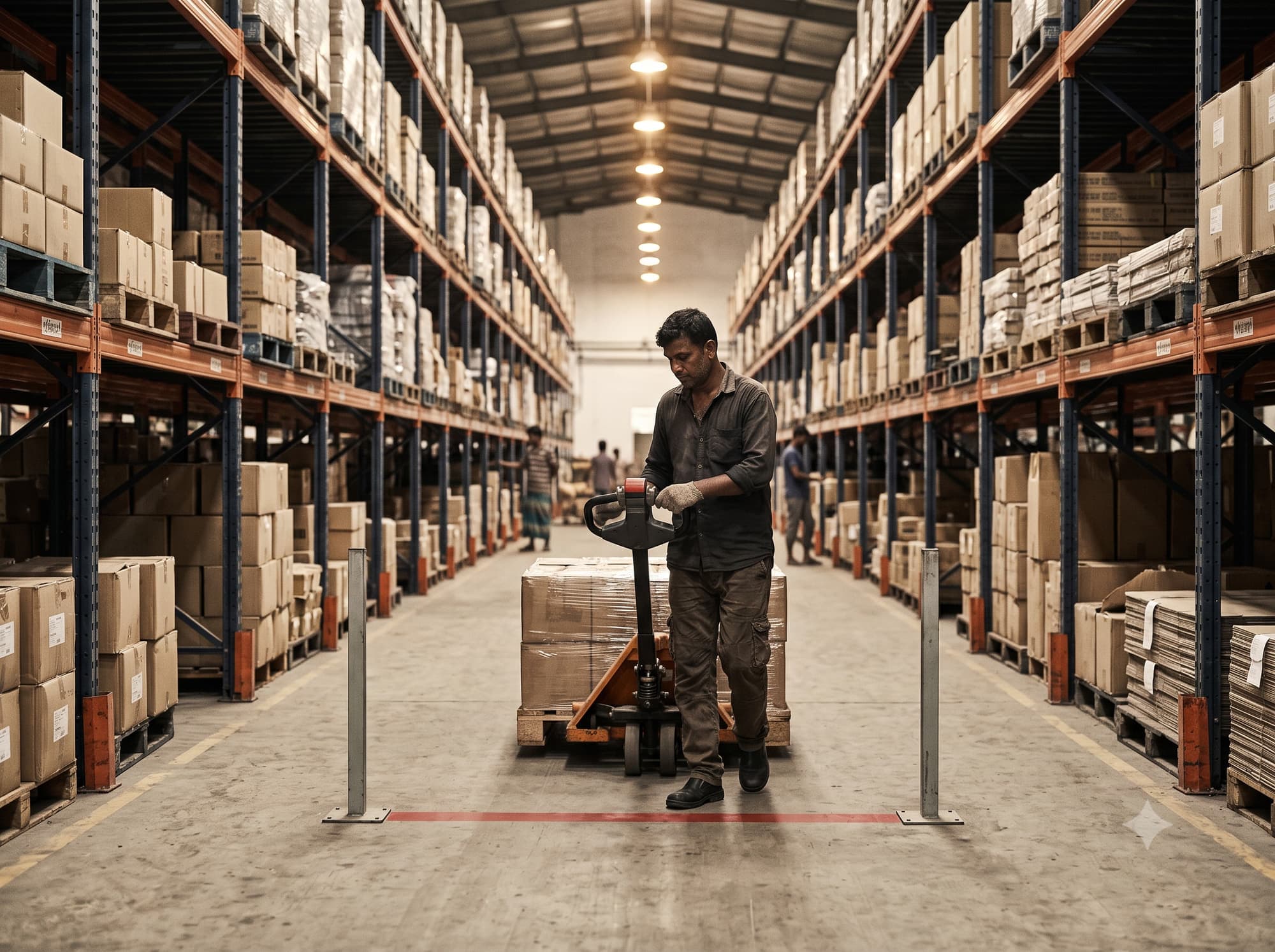
Waypoint reads make the move self-confirming. A pallet passing a floor waypoint generates the event, the platform applies the rule, and the ERP move posts without a keystroke. Where automated vehicles are in play, the same events feed routing — the read that confirms arrival is the read that releases the next task.
The workflow
Four steps, in this order. A step out of sequence is a broken process, not a variation.
- 01
Read the waypoint
Portals and floor waypoints capture material moving between zones, with direction and timestamp.
- 02
Apply the rule
The rules engine decides what the event means: a putaway, a line issue, a transfer, an exception.
- 03
Post to ERP
The move posts through the connector using idempotent APIs, so a replayed event never double-posts.
- 04
Route and confirm
Where AGVs or AMRs are deployed, the same event releases the next task and confirms completion.
What it is
made of
Four layers, in the order data moves: a tag is read, the read becomes an event, a rule decides what it means, and a business system acts on it.
- 01
Tags
What carries the identity
- UHF pallet and tote tags
- Rugged reusable tags for internal containers
- Vehicle tags for AGV and forklift identification
- 02
Readers & edge
What turns presence into an event
- Zone portals and floor waypoints
- Forklift-mounted readers
- Edge gateways for protocol translation
- 03
Platform
What decides what the event means
- Event-to-transaction rules engine
- Idempotent posting and replay safety
- Exception queue for unmatched events
- Move history and audit trail
- 04
Integrations
What acts on the decision
- ERP
- WMS
- AGV/AMR fleet control
What we supply
- 01
Floor waypoint
A read point at a zone boundary rather than a doorway. Direction-aware, so a pallet crossing one way is a putaway and the other way is a return.
- Floor or post-mounted antennas
- Direction-aware detection
- Zone-boundary placement
- Rated for forklift traffic
- 02
Edge gateway
Translates between reader protocols, the platform and vehicle fleet control, and keeps the plant running through a network outage with local rule fallbacks.
- Multi-protocol translation
- Local rule fallback
- Store-and-forward buffering
- Fleet control interface
What to expect
Ranges, not single flattering figures. Baselines are captured for four to eight weeks before a pilot starts, so the delta is measured rather than claimed.
- Manual move entry
- Largely eliminated
- Stock record lag
- Seconds, not shifts
- Move accuracy
- Event-driven
- Vehicle utilisation
- Higher with event routing
What to plan for
Every module has a failure mode. These are the ones that actually bite on this one, and what we do about them — because finding out later costs more than knowing now.
- This changes how the floor works, and a bad rollout strands people between the old process and the new one.
- Phased enablement zone by zone with documented backout plans, and the manual path kept live until the automated one has proven itself in that zone.
Your existing systems
- ERP
- WMS
- AGV/AMR
Where it earns its keep
- Plants where ERP stock never matches the floor
- Operations running or planning AGV/AMR fleets
- Sites carrying significant manual data-entry labour
Before you
buy
The things operations directors actually ask on the first call.
What if a read is missed?
The event lands in an exception queue rather than silently failing, and the manual path stays available. Missed reads are also monitored per waypoint, because a rising miss rate is an antenna problem you want to know about early.
Could a duplicate read double-post a move?
No. Posting is idempotent — the same event replayed produces the same single transaction. That is a deliberate design requirement, not an afterthought.
Do we need AGVs for this to be worth it?
No. Most of the value is eliminating manual move confirmation and closing the gap between ERP and reality. AGV routing is an additional use of events you would be generating anyway.
The rest of manufacturing
- 01
Maintenance Schedule Automation
Preventive maintenance triggered by actual running hours instead of a date in a spreadsheet.
- 02
Production Planning Optimisation
Live WIP status at every station, so the planner sees the bottleneck while it still matters.
- 03
WIP Tracking & Assembly Line Quality Control
Verify the right part reached the right station before the operation happens, not after.
- 04
Batch & Lot Tracking for Quality Control
Trace any finished unit back to its raw material lots, and any lot forward to every unit it touched.
Let's design theright system foryour floor
- Call+880 1713 819528 · 01713 222558
- Emailservice@ratsbd.com
- VisitGround Floor, House-7, Road-13, Sector 14, Uttara, Dhaka-1230
Get your quote
Tell us your store type and city. A specialist surveys your floor, recommends the exact system and sends a clear quote — no obligation.
Request a quote Chat on WhatsApp