Batch & Lot Tracking for Quality Control
Trace any finished unit back to its raw material lots, and any lot forward to every unit it touched.
The problem it solves
A recall is a test of records you did not know you were taking. You find out how good your traceability is on the worst possible day, under a deadline set by somebody else.
Most plants can trace backwards, slowly, through paperwork. Very few can trace forwards — given a suspect lot of raw material, name every finished unit that contains it and where each one shipped. That forward trace is what determines whether a recall is a pallet or a product line.
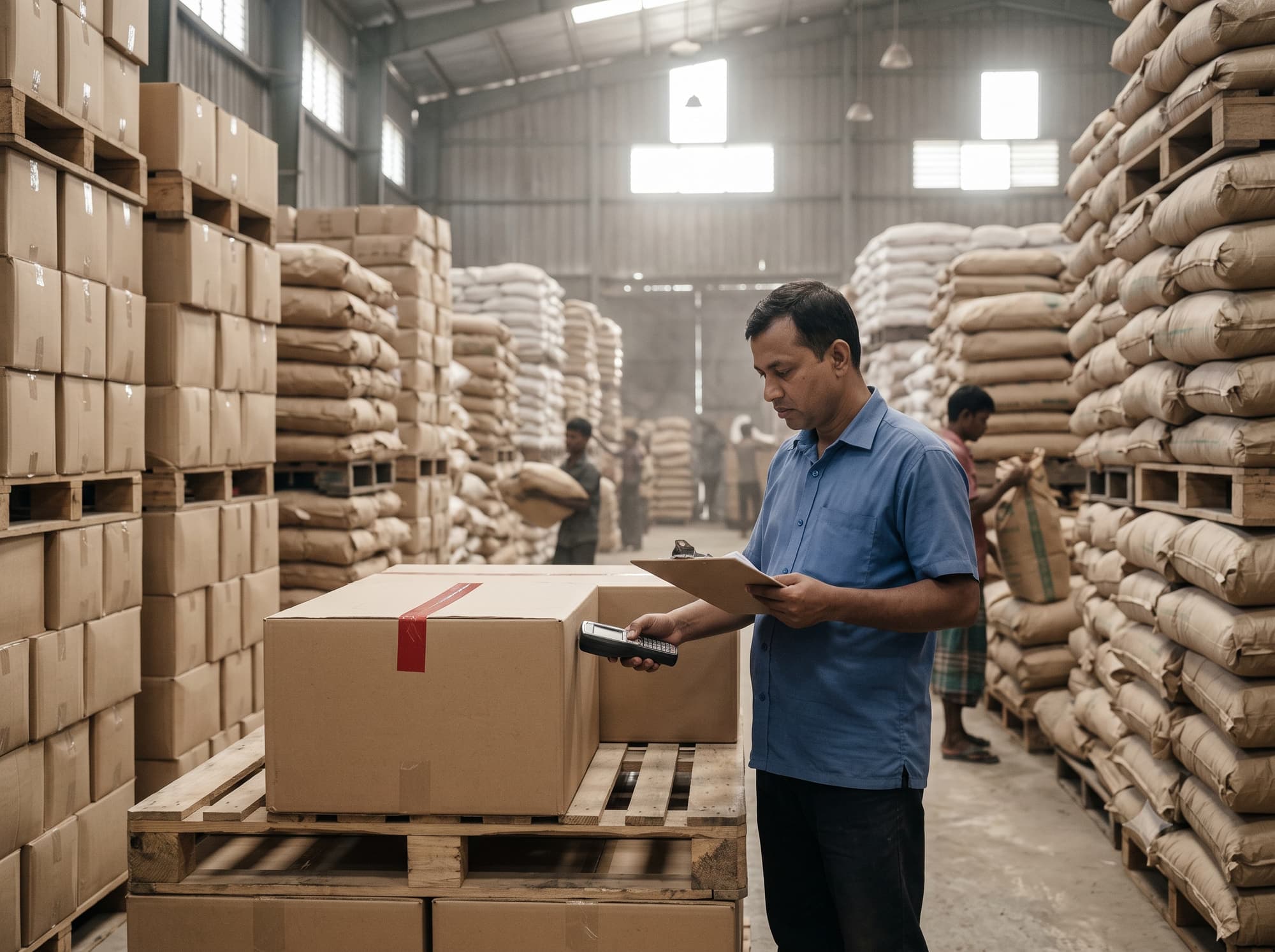
Tagging at lot level and reading at each consumption and production point builds the genealogy as you go, rather than reconstructing it afterwards. The trace becomes a query instead of an investigation, and the audit that international buyers increasingly demand becomes a report you can run in front of them.
The workflow
Four steps, in this order. A step out of sequence is a broken process, not a variation.
- 01
Receive the lot
Incoming materials are tagged at lot level and bound to supplier, certificate and receipt date.
- 02
Record consumption
Reads at issue and at the line capture which lots went into which production run — the genealogy link.
- 03
Tag the output
Finished cases and pallets are tagged and bound to the run, inheriting the full upstream lot record.
- 04
Trace either way
Backwards from a unit to its lots, or forwards from a lot to every unit and shipment it reached.
What it is
made of
Four layers, in the order data moves: a tag is read, the read becomes an event, a rule decides what it means, and a business system acts on it.
- 01
Tags
What carries the identity
- UHF case and pallet tags
- Lot-level tags on raw material containers
- Rugged tags for returnable totes
- 02
Readers & edge
What turns presence into an event
- Handhelds for issue and receipt
- Portals at line entry and finished goods
- Dock portals for despatch
- 03
Platform
What decides what the event means
- Lot genealogy model
- Forward and backward trace queries
- Recall scoping and reporting
- Certificate and QA document linkage
- 04
Integrations
What acts on the decision
- ERP
- QMS
- WMS
What we supply
- 01
Lot tag
Applied to the container, not the material. One tag covers a whole lot, which keeps traceability affordable on bulk inputs where per-unit tagging would be absurd.
- Container-level application
- Bound to supplier lot and certificate
- Rugged variants for wet and cold stores
- Re-commissioned for returnable containers
- 02
Finished goods portal
Reads cases as they leave the line and binds them to the production run, closing the genealogy without an operator step.
- Line-exit or dock frame
- Case and pallet aggregation
- Automatic run binding
- Direction-aware
What to expect
Ranges, not single flattering figures. Baselines are captured for four to eight weeks before a pilot starts, so the delta is measured rather than claimed.
- Lot traceability
- >95% linked
- Recall scoping
- Query, not investigation
- Audit readiness
- Report on demand
- Trace depth
- Lot → unit
What to plan for
Every module has a failure mode. These are the ones that actually bite on this one, and what we do about them — because finding out later costs more than knowing now.
- Label management discipline is the whole system. A lot commissioned wrong propagates that error through every downstream trace.
- Commissioning SOPs with verification at the point of application, plus periodic audits of the genealogy against physical stock.
Your existing systems
- ERP
- QMS
- WMS
Where it earns its keep
- Food, pharma and chemical processing with recall exposure
- Manufacturers under buyer or regulator audit pressure
- Plants where a recall today would mean scrapping a product line
Before you
buy
The things operations directors actually ask on the first call.
How granular does the lot need to be?
As granular as the recall you want to be able to scope. Coarser lots are cheaper to run and more expensive to recall against; we size it against the value of the product and the cost of over-scoping.
Does this satisfy buyer audits?
It produces the trace records buyers ask for, on demand rather than on a week's notice. Whether a specific certification is satisfied depends on that scheme's requirements, which we scope up front rather than promise blanket compliance.
Can it work alongside our existing barcode lot labels?
Yes. Hybrid is common and often the right first step — RFID where hands-free aggregation pays, barcode where it already works.
The rest of manufacturing
- 01
Maintenance Schedule Automation
Preventive maintenance triggered by actual running hours instead of a date in a spreadsheet.
- 02
Production Planning Optimisation
Live WIP status at every station, so the planner sees the bottleneck while it still matters.
- 03
WIP Tracking & Assembly Line Quality Control
Verify the right part reached the right station before the operation happens, not after.
- 05
ERP Integration & Automated Material Handling
RFID events drive ERP stock moves and vehicle routing, so the system reflects the floor without anyone typing.
Let's design theright system foryour floor
- Call+880 1713 819528 · 01713 222558
- Emailservice@ratsbd.com
- VisitGround Floor, House-7, Road-13, Sector 14, Uttara, Dhaka-1230
Get your quote
Tell us your store type and city. A specialist surveys your floor, recommends the exact system and sends a clear quote — no obligation.
Request a quote Chat on WhatsApp