
Patient Identification & Tracking
Wristband identification and movement checkpoints that improve safety without turning a ward into a checkpoint.
The problem it solves
Ask a hospital where a specific patient is right now and the honest answer is usually a phone call to a ward, which may or may not be answered.
Patient identification errors are rare and catastrophic; patient flow problems are constant and expensive. The same wristband addresses both — positive identification at the point of care, and location checkpoints that tell the care team where someone is without anyone walking the corridor to find out.
The design constraint that matters most here is aesthetic and human, not technical. Gates at ward doors make a hospital feel like a facility that does not trust its patients. The readers are specified flush and architectural for exactly that reason, and the system tracks checkpoints rather than following people continuously.
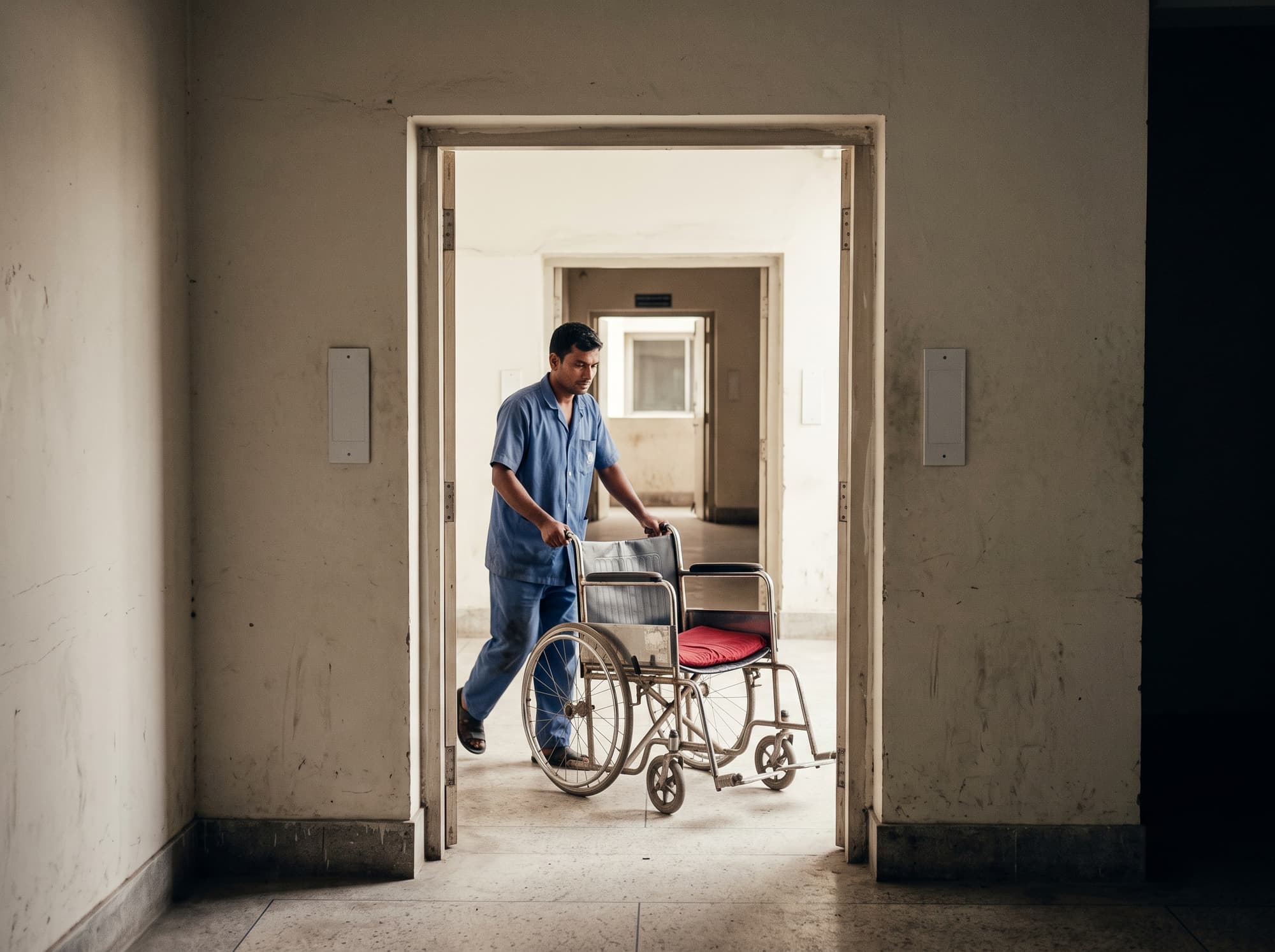
The workflow
Four steps, in this order. A step out of sequence is a broken process, not a variation.
- 01
Band at admission
The patient receives an HF/NFC wristband carrying an identifier bound to their record — no personal data on the band.
- 02
Identify at the point of care
Any procedure, sample or medication is checked against the band rather than against a question the patient may not be able to answer.
- 03
Log checkpoints
Discreet portals at ward, theatre and department entries record movement between areas — not continuous tracking.
- 04
Alert and discharge
Wander risk and unexpected delay raise alerts; the band is decommissioned at discharge.
What it is
made of
Four layers, in the order data moves: a tag is read, the read becomes an event, a rule decides what it means, and a business system acts on it.
- 01
Tags
What carries the identity
- HF/NFC patient wristbands
- Staff badge credentials
- Optional asset tags for shared equipment
- 02
Readers & edge
What turns presence into an event
- Flush architectural portals at ward and theatre entries
- Clinical handhelds for point-of-care identification
- Optional RTLS for staff duress
- 03
Platform
What decides what the event means
- Patient identity registry with strict PII separation
- Checkpoint event log
- Wander and delay alerting
- Role-based clinical views
- 04
Integrations
What acts on the decision
- HIS
- Admissions
- Theatre scheduling
What we supply
- 01
Flush ward portal
Specified to disappear into the doorway rather than announce itself. A hospital should not feel like a secure facility, and a visible gate changes how families experience the ward.
- Flush-mounted, architectural finish
- No visible pedestal or arch
- Checkpoint logging, not continuous tracking
- Cleanable clinical surfaces
- 02
Patient wristband
Identifier only. Comfortable enough to be worn for days, secure enough not to be swapped, and disclosing nothing if it comes off.
- HF/NFC, identifier only
- Skin-safe, water-resistant
- Tamper-evident closure
- Paediatric and adult sizes
What to expect
Ranges, not single flattering figures. Baselines are captured for four to eight weeks before a pilot starts, so the delta is measured rather than claimed.
- Patient ID errors
- Near-zeroppm-level
- Patient location
- Known at checkpoints
- Wander incidents
- Alerted in real time
- Flow bottlenecks
- Visible by department
What to plan for
Every module has a failure mode. These are the ones that actually bite on this one, and what we do about them — because finding out later costs more than knowing now.
- Tracking people carries privacy optics that tracking pallets does not, and staff may reasonably read it as surveillance.
- Checkpoint events rather than continuous location, PII kept off the tag entirely, role-based views so nobody sees more than their role needs, and clear signage. Staff tracking, where deployed at all, is scoped to duress alerting rather than movement monitoring.
Your existing systems
- HIS
- Admissions
- Theatre scheduling
Where it earns its keep
- Private hospitals wanting positive patient identification
- Facilities with wander risk in elderly or paediatric wards
- Hospitals where theatre and department flow is a known constraint
Before you
buy
The things operations directors actually ask on the first call.
Is this tracking patients continuously?
No. It logs checkpoint crossings at defined doorways. There is no continuous location trace, and that is a deliberate design decision rather than a technical limitation.
Will the ward look like an airport?
No — that is explicitly designed against. The readers are flush and architectural, with no pedestals or arches. If a hospital wants a visible deterrent that is a different product.
What about staff tracking?
Optional and scoped narrowly, usually to duress alerting in high-risk areas. We would push back on general staff movement monitoring; it damages trust for very little operational return.
The rest of healthcare
- 01
Medication Administration Verification
Bedside checking of the Five Rights — patient, drug, dose, route and time — before administration.
- 02
Drug Authentication
Serialised packs verified at receiving and at dispense, with chain of custody in between.
- 04
Medical Supply Inventory Management
Consumables and implants tracked by lot and expiry, with replenishment and billing that follow consumption.
- 05
Laboratory Sample Tracking & Chain of Custody
Every custody transition logged from collection to report, so a missing sample has a last known holder.
Let's design theright system foryour floor
- Call+880 1713 819528 · 01713 222558
- Emailservice@ratsbd.com
- VisitGround Floor, House-7, Road-13, Sector 14, Uttara, Dhaka-1230
Get your quote
Tell us your store type and city. A specialist surveys your floor, recommends the exact system and sends a clear quote — no obligation.
Request a quote Chat on WhatsApp