Laboratory Sample Tracking & Chain of Custody
Every custody transition logged from collection to report, so a missing sample has a last known holder.
The problem it solves
A lost sample means a patient gets stuck twice and a result arrives a day late. The lab usually cannot say where it went, because custody was never recorded — only collection and receipt.
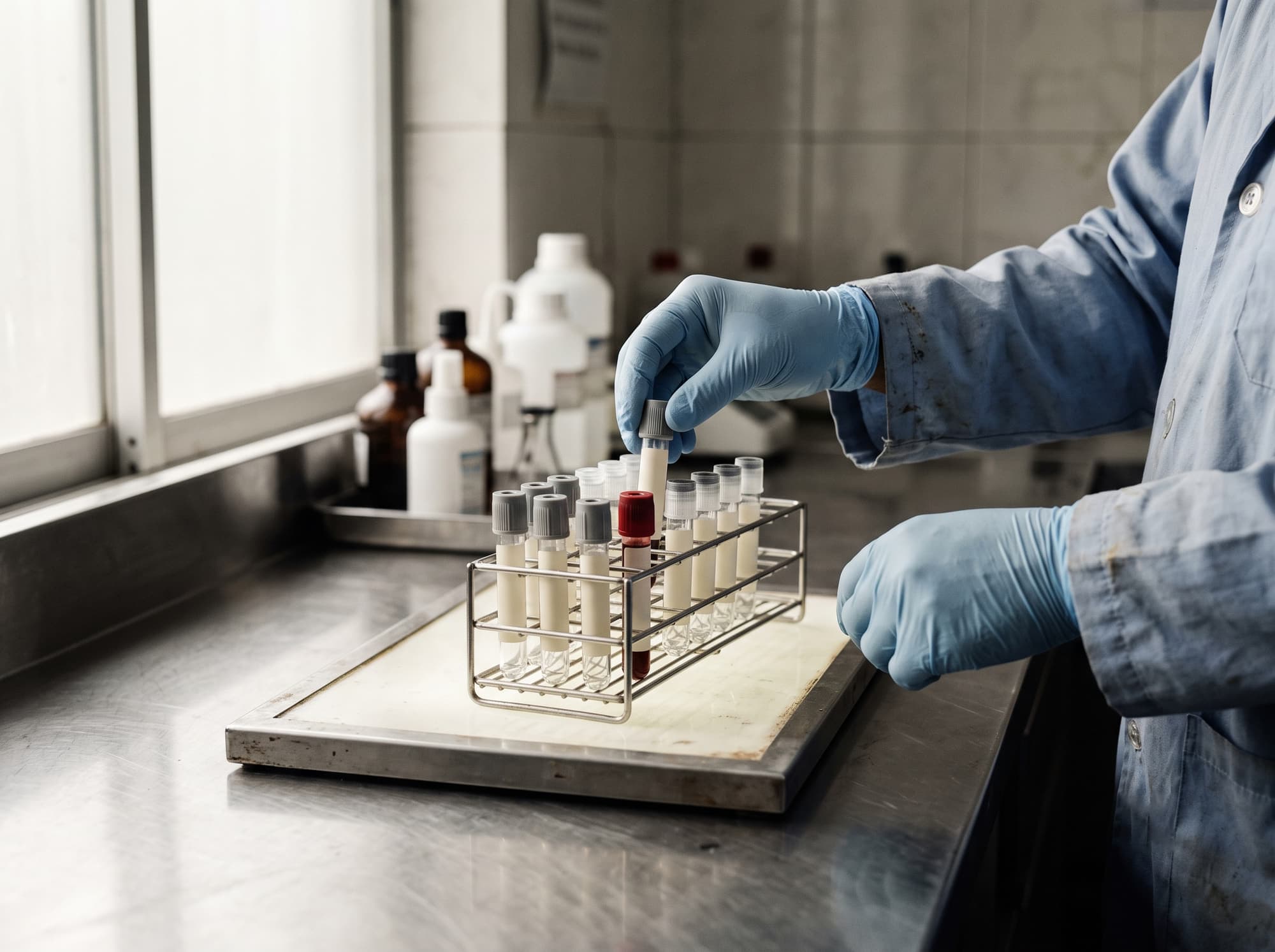
Between the ward and the analyser a sample passes through several pairs of hands and at least one transport leg, and in most labs none of those transitions are logged. When something goes missing, the investigation is a series of questions nobody can answer precisely.
Tagging the tube or the rack and reading at each transition builds custody as the sample moves. Collection, transport handover, lab intake, analysis, storage — each is an event with a time and a holder. That turns a lost sample from a mystery into a lookup, and produces the auditable custody record that accreditation increasingly asks for.
The workflow
Four steps, in this order. A step out of sequence is a broken process, not a variation.
- 01
Collect
The tube or rack is tagged at collection and bound to the patient identifier and the requested tests.
- 02
Transport
Handover between ward, porter and lab is read at each transition, so custody is never inferred.
- 03
Process
Lab intake and analysis stages are logged at the bench, linking the sample to the run and the operator.
- 04
Store and report
Storage location is recorded for retrieval and retention; the result posts against the same identifier.
What it is
made of
Four layers, in the order data moves: a tag is read, the read becomes an event, a rule decides what it means, and a business system acts on it.
- 01
Tags
What carries the identity
- HF or UHF tube collar labels
- Rack-level tags for batch transport
- Cryo-rated tags for frozen storage
- 02
Readers & edge
What turns presence into an event
- Bench readers at intake and analysis
- Portals at lab and transport boundaries
- Handhelds for storage retrieval
- 03
Platform
What decides what the event means
- Custody ledger with holder and timestamp
- Sample-to-test linkage
- Storage location index
- Turnaround and exception reporting
- 04
Integrations
What acts on the decision
- LIMS
- HIS
- Order entry
What we supply
- 01
Tube collar label
A tag small enough to wrap a sample tube without obscuring the fill line or the barcode already on it. Print-and-encode quality control matters more here than anywhere else in the portfolio, because a mis-encoded sample is a clinical risk.
- Wrap-around collar format
- HF or UHF per lab environment
- Print-encode with verification
- Cryo-rated variants available
- 02
Bench reader
Reads a full rack at once at intake, so a delivery of forty tubes is booked in as one action instead of forty.
- Rack-level batch read
- Bench-top footprint
- Cleanable laboratory housing
- LIMS integration on read
What to expect
Ranges, not single flattering figures. Baselines are captured for four to eight weeks before a pilot starts, so the delta is measured rather than claimed.
- Custody gaps
- Eliminated by design
- Lost samples
- Last holder known
- Intake time
- Rack, not tube
- Turnaround
- Measured per stage
What to plan for
Every module has a failure mode. These are the ones that actually bite on this one, and what we do about them — because finding out later costs more than knowing now.
- Small-label handling is genuinely fiddly, and an encoding error on a sample is a clinical risk rather than an inventory one.
- Careful HF versus UHF selection for the specific lab environment, print-and-encode with read-back verification at the point of application, and barcode retained alongside as the fallback identity.
Your existing systems
- LIMS
- HIS
Where it earns its keep
- Diagnostic labs with multi-site sample collection
- Hospitals where samples are lost between ward and lab
- Laboratories under accreditation pressure to evidence custody
Before you
buy
The things operations directors actually ask on the first call.
HF or UHF for sample tubes?
It depends on the bench environment and how close tubes sit to each other. UHF reads a whole rack at once but is more prone to reading the rack next door; HF is deliberate and short-range. We test on your actual racks rather than assume.
Do we drop barcodes?
No. Barcode stays as the fallback identity. In a clinical setting you keep a second, independent way to identify a sample — redundancy is the point.
Can it track frozen storage?
Yes, with cryo-rated tags. Standard adhesive labels fail at freezer temperatures, so storage tagging is specified separately from collection tagging.
The rest of healthcare
- 01
Medication Administration Verification
Bedside checking of the Five Rights — patient, drug, dose, route and time — before administration.
- 02
Drug Authentication
Serialised packs verified at receiving and at dispense, with chain of custody in between.
- 03
Patient Identification & Tracking
Wristband identification and movement checkpoints that improve safety without turning a ward into a checkpoint.
- 04
Medical Supply Inventory Management
Consumables and implants tracked by lot and expiry, with replenishment and billing that follow consumption.
Let's design theright system foryour floor
- Call+880 1713 819528 · 01713 222558
- Emailservice@ratsbd.com
- VisitGround Floor, House-7, Road-13, Sector 14, Uttara, Dhaka-1230
Get your quote
Tell us your store type and city. A specialist surveys your floor, recommends the exact system and sends a clear quote — no obligation.
Request a quote Chat on WhatsApp