
Medication Administration Verification
Bedside checking of the Five Rights — patient, drug, dose, route and time — before administration.
The problem it solves
The Five Rights have been nursing doctrine for decades. They are also, in almost every ward in this country, verified by a tired human comparing two handwritten things at three in the morning.
Medication errors are overwhelmingly system failures, not competence failures. Look-alike packaging, similar patient names, an interrupted round, a drug chart that was updated after the trolley was loaded — none of these are solved by asking staff to concentrate harder.
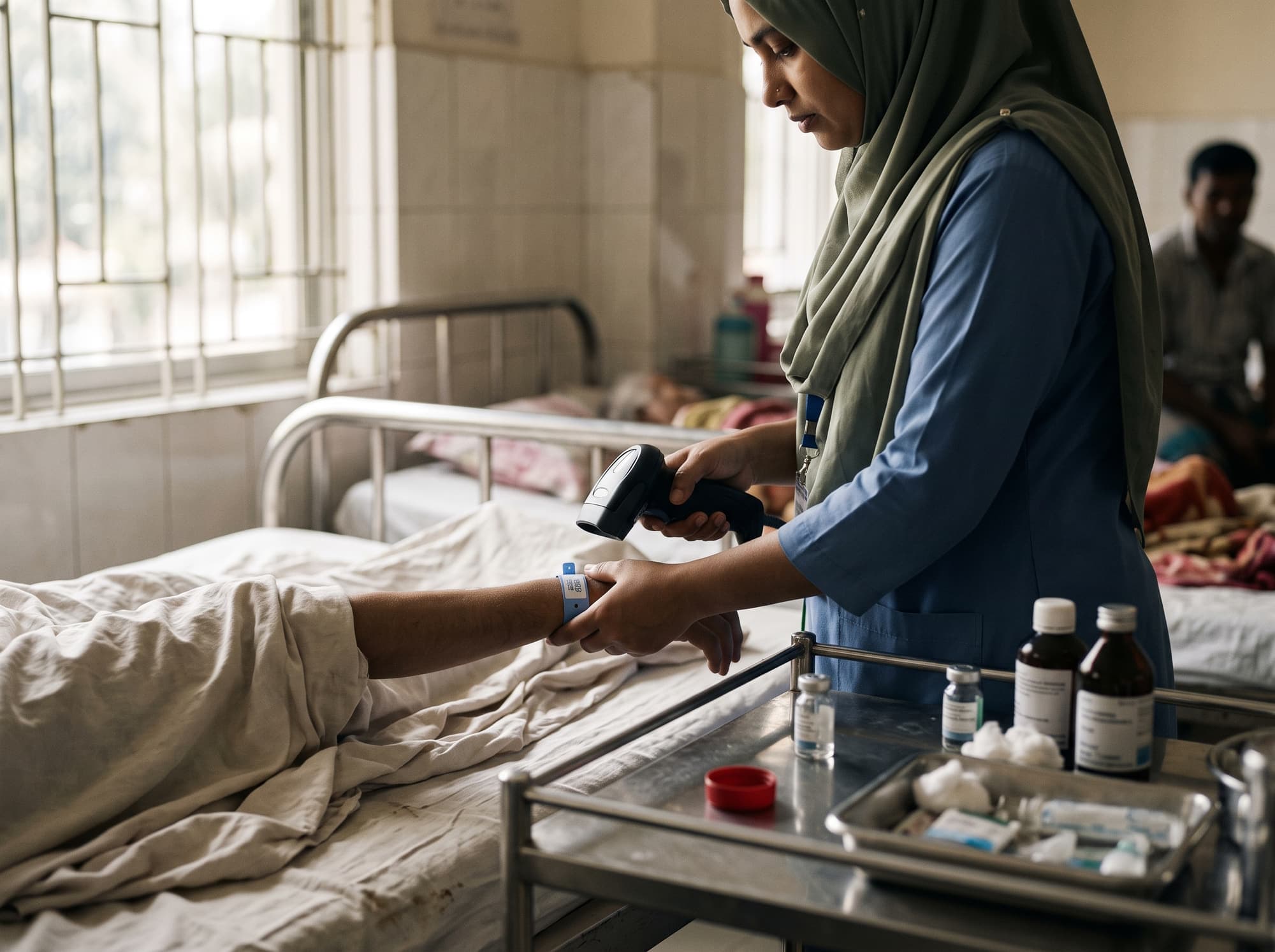
A bedside check makes the verification mechanical. Scan the wristband, scan the medication, and the platform compares both against the prescription and the schedule before anything is given. A mismatch alerts before administration rather than being discovered in an incident report afterwards. It runs hybrid with barcode deliberately, because the transition is a clinical workflow change and forcing it overnight is how these deployments fail.
The workflow
Four steps, in this order. A step out of sequence is a broken process, not a variation.
- 01
Authenticate
The nurse identifies with a staff badge, so every administration carries an accountable name.
- 02
Identify the patient
The HF/NFC wristband is read at the bedside — not a name asked of a patient who may not be able to answer.
- 03
Verify the medication
The unit-dose pack is read and checked against prescription, dose, route and scheduled time.
- 04
Document
Administration posts to the eMAR automatically, with mismatches raised as alerts before anything is given.
What it is
made of
Four layers, in the order data moves: a tag is read, the read becomes an event, a rule decides what it means, and a business system acts on it.
- 01
Tags
What carries the identity
- HF/NFC patient wristbands
- HF/NFC unit-dose medication tags
- UHF tags on pharmacy totes and bins
- Staff badge credentials
- 02
Readers & edge
What turns presence into an event
- Bedside HF/NFC readers
- Clinical handhelds
- Cabinet readers in medication rooms
- 03
Platform
What decides what the event means
- Medication master data and schedules
- Five Rights rules engine
- Real-time mismatch alerting
- Immutable administration audit trail
- 04
Integrations
What acts on the decision
- HIS
- eMAR
- Pharmacy system
What we supply
- 01
Patient wristband
Carries an identifier and nothing else. No name, no diagnosis, no date of birth — anything sensitive stays server-side behind role-based access, so a lost band discloses nothing.
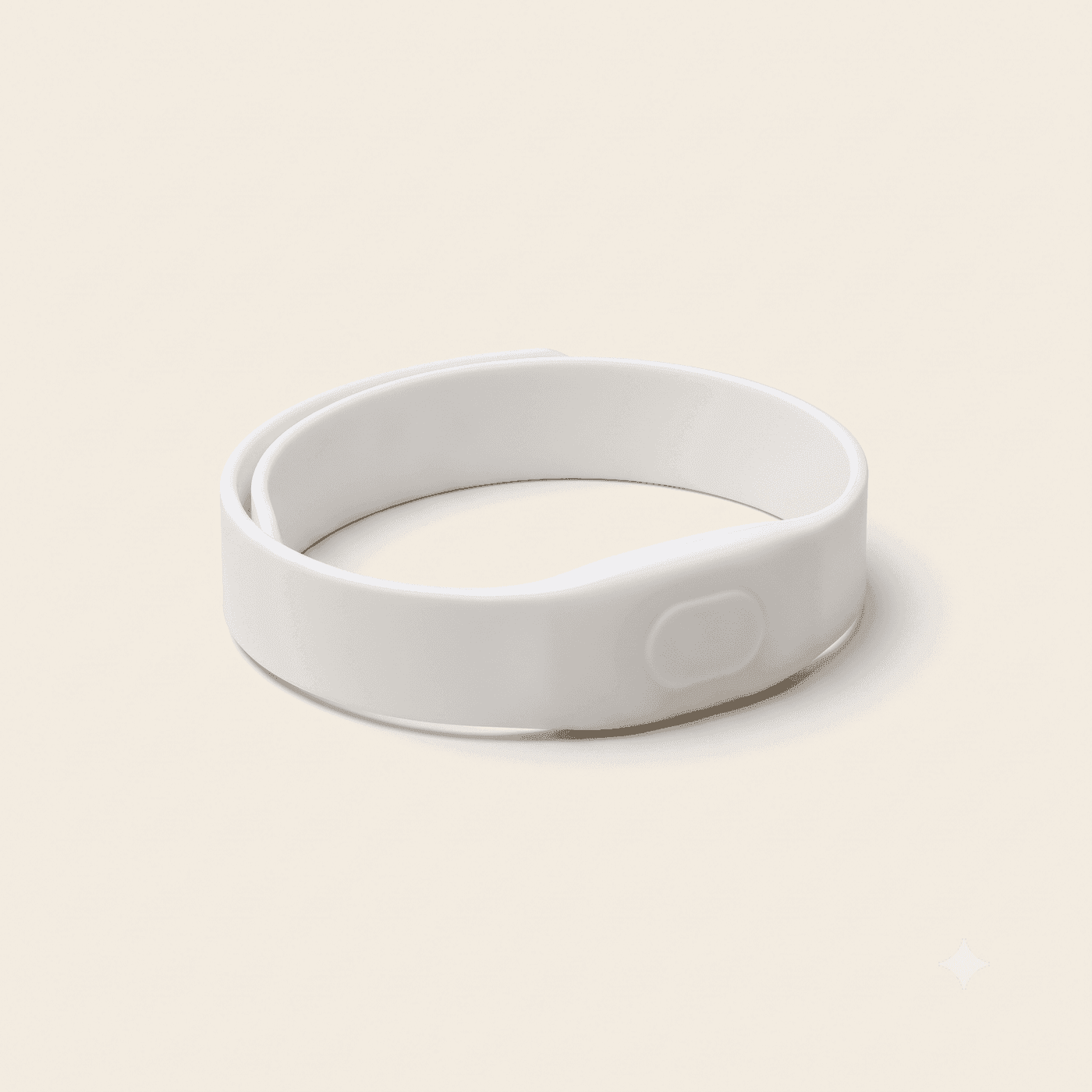
- HF/NFC, 13.56 MHz
- Identifier only, no PII on tag
- Skin-safe, water-resistant
- Single-use, tamper-evident closure
- 02
Bedside reader
Short-range by design. A reader that can see the next bed is a reader that will eventually verify the wrong patient, so the read zone is deliberately centimetres.
- Near-field, centimetre read range
- Wall or trolley mount
- Audible and visual pass/fail
- Cleanable clinical housing
What to expect
Ranges, not single flattering figures. Baselines are captured for four to eight weeks before a pilot starts, so the delta is measured rather than claimed.
- Medication errors
- 50–85% lowerhybrid barcode + RFID
- Five Rights compliance
- Verified per dose
- Administration record
- Automatic to eMAR
- Audit trail
- Immutable, per event
What to plan for
Every module has a failure mode. These are the ones that actually bite on this one, and what we do about them — because finding out later costs more than knowing now.
- This changes the nursing round, which is the hardest kind of change to land. Cross-reads between adjacent beds would be a safety issue in themselves.
- Hybrid barcode and RFID rollout in one high-risk ward first, read zones tuned to centimetres, and super-user champions on each shift rather than a training session and a hope.
- Clinical data attracts the strictest privacy expectations of anything on this platform.
- Identifiers on the tag only, sensitive data server-side under role-based access, immutable audit logs, and on-premise edge options for sites that require them.
Your existing systems
- HIS
- eMAR
- Pharmacy
Where it earns its keep
- Private hospitals with 100+ beds ready to pilot one ward
- High-acuity wards where medication error risk is concentrated
- Hospitals under clinical governance pressure to evidence safety
Before you
buy
The things operations directors actually ask on the first call.
Does this replace barcode scanning?
Not initially, and possibly not ever in every area. Hybrid is the design: RFID where hands-free reading genuinely helps, barcode where it already works. Forcing a single modality across a live ward is how these projects get rejected by the staff who have to use them.
What stops it verifying the patient in the next bed?
Read range measured in centimetres, not metres. Cross-reads would be a patient safety issue, so the reader is specified short-range and the zone is verified per bay at commissioning.
Where does patient data live?
On the server, behind role-based access. The wristband carries an identifier and nothing more, so a band that falls off in a corridor discloses nothing about the person who was wearing it.
The rest of healthcare
- 02
Drug Authentication
Serialised packs verified at receiving and at dispense, with chain of custody in between.
- 03
Patient Identification & Tracking
Wristband identification and movement checkpoints that improve safety without turning a ward into a checkpoint.
- 04
Medical Supply Inventory Management
Consumables and implants tracked by lot and expiry, with replenishment and billing that follow consumption.
- 05
Laboratory Sample Tracking & Chain of Custody
Every custody transition logged from collection to report, so a missing sample has a last known holder.
Let's design theright system foryour floor
- Call+880 1713 819528 · 01713 222558
- Emailservice@ratsbd.com
- VisitGround Floor, House-7, Road-13, Sector 14, Uttara, Dhaka-1230
Get your quote
Tell us your store type and city. A specialist surveys your floor, recommends the exact system and sends a clear quote — no obligation.
Request a quote Chat on WhatsApp