
Container & Pallet Tracking
Dock and yard reads that turn ETAs into events and make a missing pallet a lookup rather than a phone call.
The problem it solves
Ask where a pallet is and you get an estimate built from a departure time and an assumption. Ask where it was last read and you get a place and a timestamp.
Loss in distribution is rarely dramatic. A pallet goes to the wrong bay, a container sits in the wrong yard row, a load leaves without one of its units — and none of it surfaces until a customer chases, by which point the trail is cold.
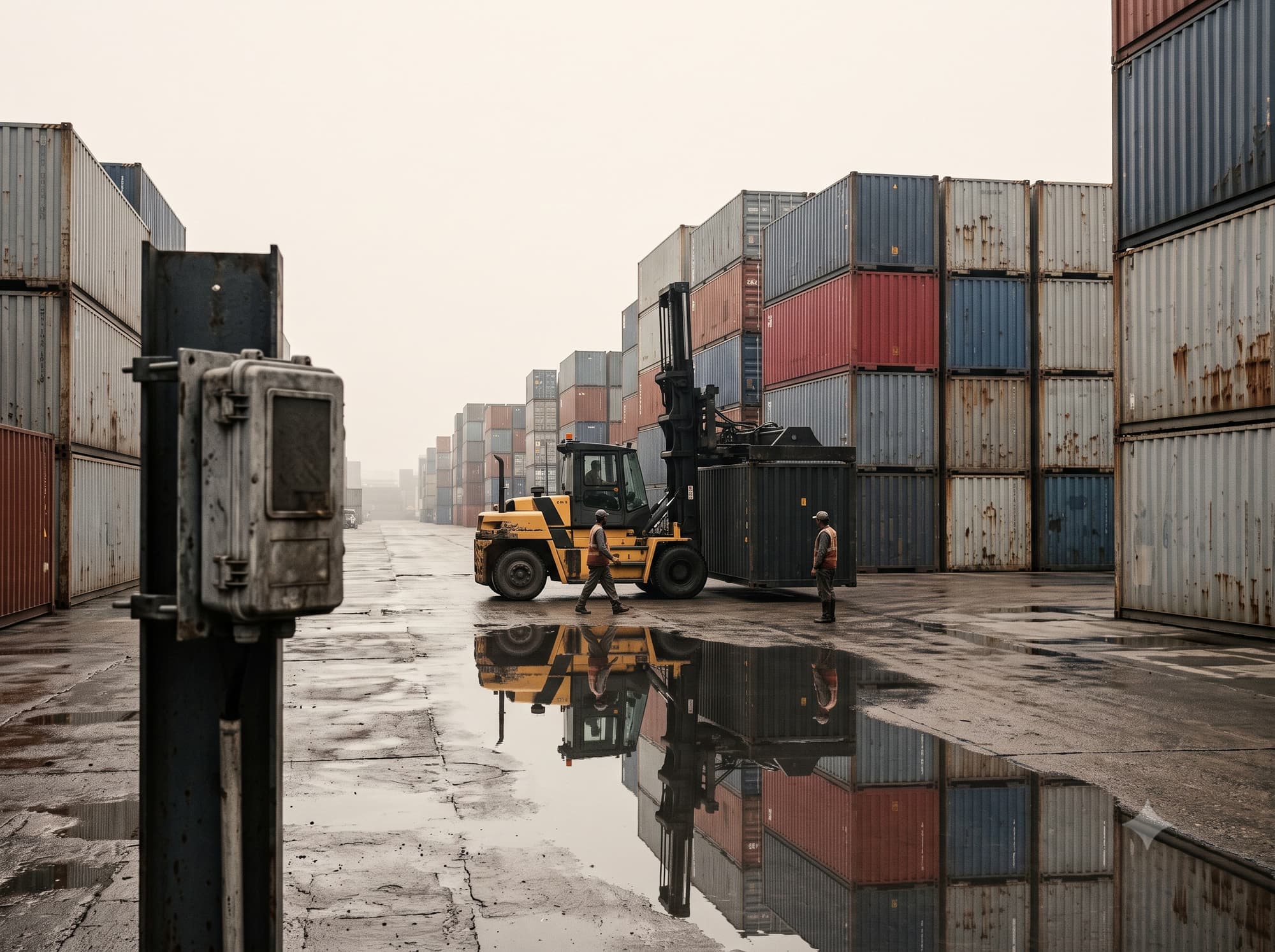
Reads at gate, dock and yard turn each handover into an event. Proof of handover exists at every transfer, ETA is calculated from where something actually was rather than when it was supposed to leave, and lane performance becomes a measurement rather than a supplier's claim. The engineering work here is environmental — outdoor RF, metal, weather — which is why rugged tags and weatherised portals are specified rather than the indoor equivalents.
The workflow
Four steps, in this order. A step out of sequence is a broken process, not a variation.
- 01
Gate in
A gantry or post-mounted reader captures the unit entering the site, with direction and timestamp.
- 02
Dock and yard
Dock portals and yard lane readers log placement and movement between rows and bays.
- 03
Load and dispatch
A verification read at loading confirms the full manifest left, before the vehicle does.
- 04
Gate out
The exit read closes proof of handover and starts the event-based ETA for the next node.
What it is
made of
Four layers, in the order data moves: a tag is read, the read becomes an event, a rule decides what it means, and a business system acts on it.
- 01
Tags
What carries the identity
- Rugged UHF tags for containers and returnable pallets
- Weatherised asset tags for yard equipment
- Case tags where unit-level visibility is needed
- 02
Readers & edge
What turns presence into an event
- Weatherised gate gantries
- Dock door portals
- Post-mounted yard lane readers
- Vehicle-mounted mobile readers
- 03
Platform
What decides what the event means
- Event ledger with location and timestamp
- Manifest verification at load
- Event-based ETA calculation
- Lane and node performance reporting
- 04
Integrations
What acts on the decision
- WMS
- TMS
- ERP
What we supply
- 01
Rugged container tag
Bolt-mounted, sealed, and expected to survive years outdoors on a steel box. Nothing about an indoor label survives this environment.
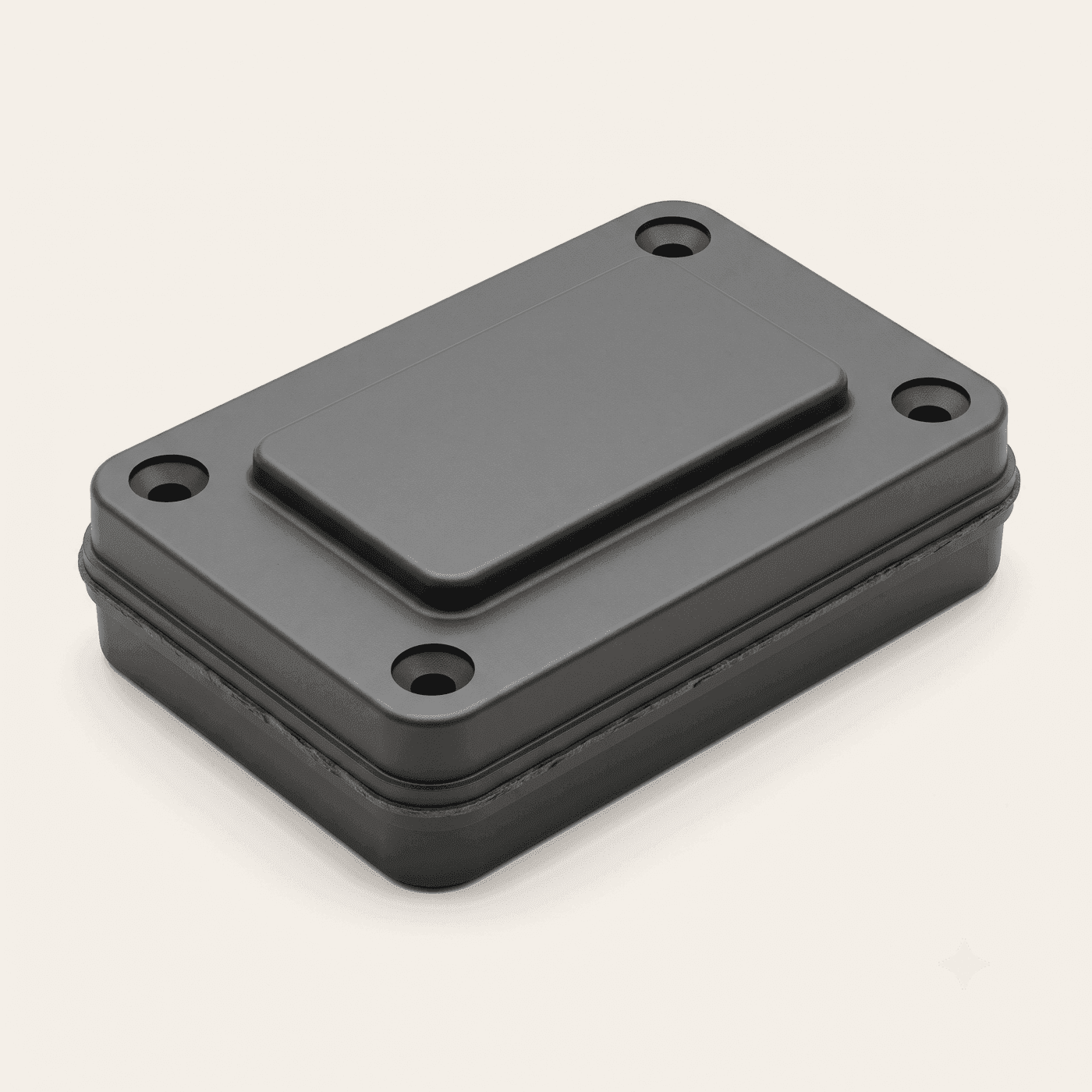
- Moulded polymer, bolt-mounted
- On-metal construction
- IP68, UV and salt resistant
- Multi-year outdoor service life
- 02
Weatherised gate gantry
A wide read zone across a full traffic lane, in enclosures rated for monsoon and heat. Read reliability here is decided by antenna angle and lane discipline, both settled on site.
- Full-lane read width
- IP66 enclosures
- Direction-aware capture
- 4G/5G backhaul with buffering
What to expect
Ranges, not single flattering figures. Baselines are captured for four to eight weeks before a pilot starts, so the delta is measured rather than claimed.
- Unit loss
- Materially lowersite-dependent
- ETA accuracy
- Event-based
- Proof of handover
- Logged per transfer
- Lane performance
- Measured, not claimed
What to plan for
Every module has a failure mode. These are the ones that actually bite on this one, and what we do about them — because finding out later costs more than knowing now.
- Outdoor RF is genuinely harder than indoor — weather, metal, distance and reflection all work against a clean read.
- Rugged tags, weatherised portals and a site survey done in the conditions the site actually operates in. Read rates are monitored per portal so degradation surfaces as an alert rather than as missing data.
Your existing systems
- WMS
- TMS
- ERP
Where it earns its keep
- Distribution centres with high inbound and outbound volume
- Operators running returnable pallet or container pools
- 3PLs needing provable handover between parties
Before you
buy
The things operations directors actually ask on the first call.
Will this work in the monsoon?
The enclosures are rated for it. What changes in heavy rain is read performance at the margins, which is why we survey in realistic conditions and monitor read rates per portal rather than assuming a datasheet figure holds year-round.
Do we tag every case, or just pallets?
Pallet and container level is where the return is for most operations. Case-level tagging only pays where you genuinely need unit visibility across the network, and it multiplies tag cost considerably.
Does this replace our WMS?
No. It supplies verified movement events to it. Your WMS keeps owning inventory, locations and tasks.
The rest of logistics
Let's design theright system foryour floor
- Call+880 1713 819528 · 01713 222558
- Emailservice@ratsbd.com
- VisitGround Floor, House-7, Road-13, Sector 14, Uttara, Dhaka-1230
Get your quote
Tell us your store type and city. A specialist surveys your floor, recommends the exact system and sends a clear quote — no obligation.
Request a quote Chat on WhatsApp